Version 2.9 (Beta 3)

Changes since version 2.9 beta 2:

  • Add native x64 support. The x64 driver internally is a separate binary and may develop issues not present in the x86 version, so: please test! Otherwise, the behaviour should be entirely transparent.
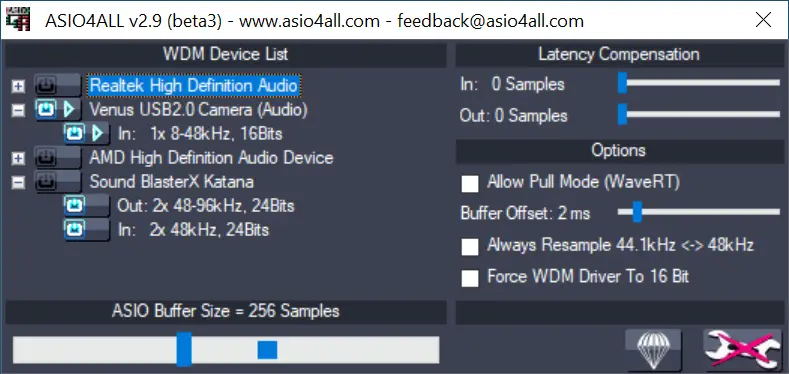
  • GUI moved into its own thread completly. This has been necessary because existing host software as a whole is too broken on average as to be able to chase individual developers and have them fix it. Never mind the intstalled base out there. As a direct result, the ASIO control panel does not appear as modal dialog anymore. However, this solution seems to work better than I orignially expected.
  • Improved algorithm to find a workable sample rate for some devices (e.g. EMU 404)
Posted

in

,

by

Tags:

Comments

Leave a Reply

Your email address will not be published. Required fields are marked *

This site uses Akismet to reduce spam. Learn how your comment data is processed.

Copyright © Michael Tippach

Imprint | Privacy

Powered by WordPress

ASIO is a trademark of Steinberg Media Technologies GmbH.  All other trademarks are the property of their respective owners, used for product identification purposes only.

  • Introduction

    Introduction

    Welcome to ASIO4ALL! This manual enables you to make the most of your ASIO4ALL installation, especially when it comes to the advanced features newly introduced in this Version of ASIO4ALL. In order to achieve the best possible results with ASIO4ALL it is recommended that your computer is configured accordingly. For updates, help and further information,

    more

  • Getting Started

    Getting Started

    Setting up your audio software In order to make use of ASIO4ALL, you need to configure your audio software accordingly. How you would do this depends on your particular software application. Generally, you would always enter the audio configuration menu and select ASIO -> ASIO4ALL v2. There now should be a button to launch the

    more

  • WDM Device List

    WDM Device List

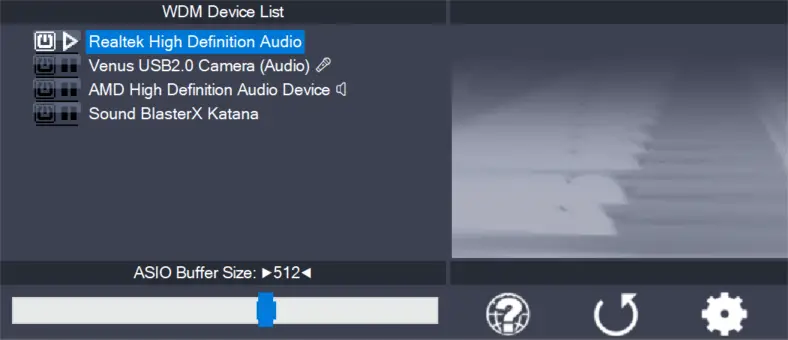
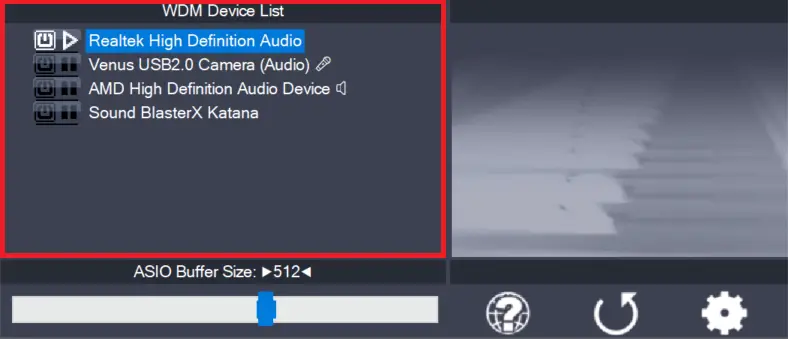
    This is the list of audio devices found in your system. Highlight the device that you want to make changes to. Note: All parameter changes always only apply to the device currently highlighted! Activate the device you want to use by clicking on the button next to the device name! In the picture above, the

    more