

- This version officially supports Windows 10 and Windows 11.
- Also confirmed to work with Windows 7 and Windows 8, with some minor GUI visual artefacts, though.
- Report bugs to feedback@asio4all.com!
Known issues
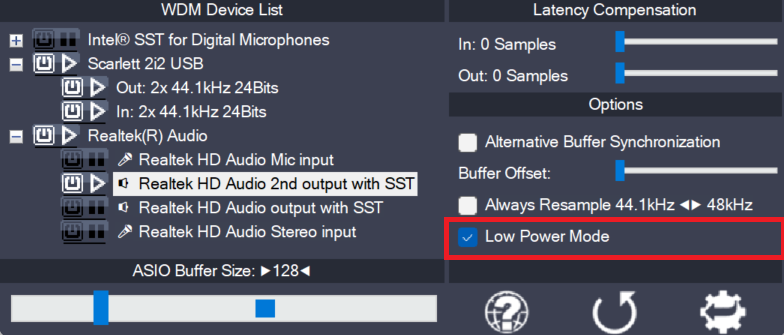
- Generally also works quite well on Windows 11 for ARM64, albeit there is no native ARM version yet. The “Qualcomm Aqstic” integrated mic will not work with the defaults, though. Select “Alternative Buffer Synchronization” in the ASIO control panel advanced settings!
Changes since version 2.20
- Improve operation with USB class 1 audio devices, both in terms of stability and round trip latency – specifically at 44.1k sample rate.
- Remove “Debug” option from the installer. Users would frequently enable it – just because “more is always better” – and later suffer from access violation crash dumps initiated by badly coded host applications.
- Off- Line settings are now always enabled, thus completely removing the component selection from the installer.
Comments
6 responses to “Version 2.21”
Ironic that this image with AI is potraying an anti-AI protest. Kinda gross. fuck AI
not even ironic, just straight up hypocrisy.
ich verwende traktor s4mk3,habe jetzt neue asio installiert, und wenn ich beim angeschlossenem controller spiele, geht das über die kopfhörer, aber wenn man beispielweise spotify abspielt läuft das über die laptoplautsprecher, obwohl das auch über kopfhörer gehen sollte. Danke
Thank you for fixing the interaction with AMD — my old mobo died so a new one with new CPU etc. Realtek audio. win10 22h2 And it drove me batty that Audition3 wasn’t working to record, though it did a splendid job on the old mobo. v2.21 fixed it and all is well, again.
asio causes severe audio hiccups while im using the program that uses it it only does that when i enable asio
i couldnt get any of those commands to work in powershell. Got errors for all of it. Everything w. as typed correctlyi left out the commands for the other manufacturers and just used HP